 Jovvy
Blog · What to wear
Dress codes, explained.
The invitation says “cocktail attire,” or “black tie optional,” or just “festive.” For a gala, a holiday party, a work dinner, or a wedding, here is what each dress code means and what to wear to it.
A dress code is the host’s way of telling you what kind of event it will be. It sets how dressed up everyone is, so nobody feels out of place, and it hints at the occasion itself: an evening ballroom, a garden in the afternoon, a backyard with string lights.
The codes run in a rough ladder, from the most formal at the top to the most relaxed at the bottom. Find the one on your invitation, and you’ll know about how dressed up to be.
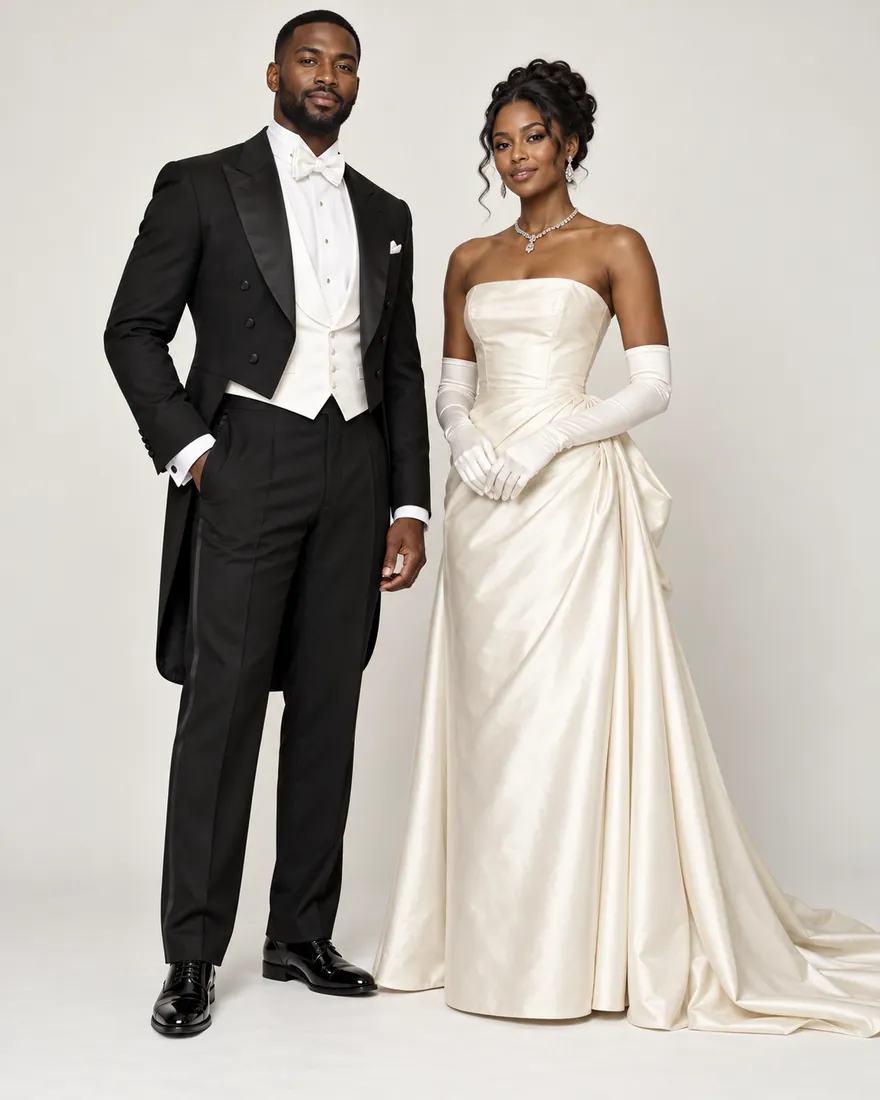
No. 1 · The most formal
White tie
The most formal dress code there is, and the rarest. You’ll see it for state dinners, royal and diplomatic occasions, grand balls, some opera and charity galas, and the occasional very traditional evening wedding. There is very little room to interpret it: it is a uniform, worn exactly.
- Suits and shirts
- A black tailcoat, cut short in front with tails behind; matching trousers with a satin stripe; a white wing-collar shirt; a white waistcoat and a white bow tie; black patent shoes.
- Dresses and more
- A full-length evening gown, in any color, white and ivory included (except at a wedding). Long gloves are traditional, and this is the night for your finest jewelry.
- Leave at home
- Anything above the ankle, a black bow tie, and a regular suit jacket.
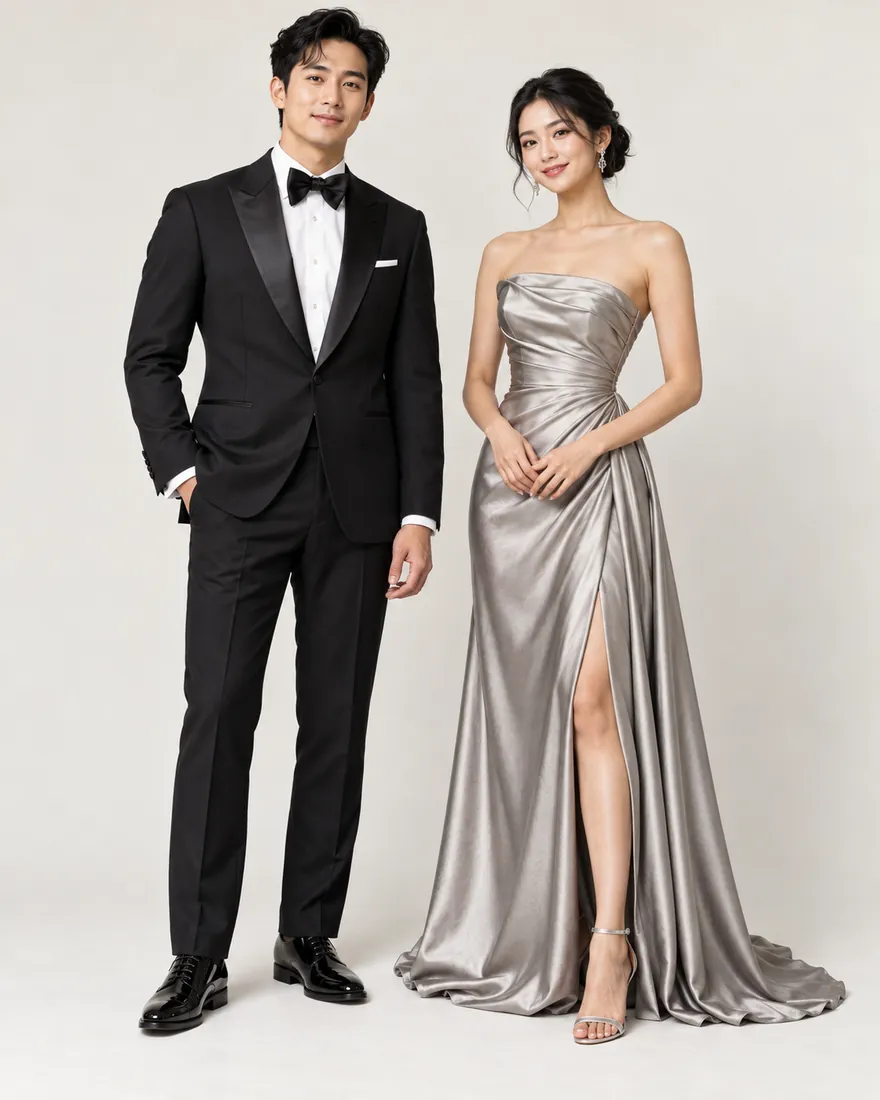
No. 2 · Evening formal
Black tie
The classic code for an elegant evening: galas, award dinners, charity balls, and formal evening weddings, usually starting at six or later. It is a step below white tie, and a clear signal that the night will be elegant.
- Suits and shirts
- A tuxedo in black or midnight blue, with satin lapels; a white dress shirt; a black bow tie; black patent or well-polished shoes.
- Dresses and more
- A floor-length gown is the classic. A very elegant midi dress or a dressy jumpsuit in a luxurious fabric is usually fine too.
- Leave at home
- A business suit, a long necktie, and anything casual or short.
In between · The tuxedo is up to you
Black tie optional
Common for galas, formal dinners, and weddings. The hosts will wear black tie, and many of their guests will too, but nobody has to. It sits between black tie and formal.
- Suits and shirts
- A tuxedo, if you have one. A dark suit (black, charcoal, or navy) with a tie is just as welcome.
- Dresses and more
- A floor-length gown, an elegant cocktail dress, or dressy separates.
- Leave at home
- Light, daytime suits and anything casual.
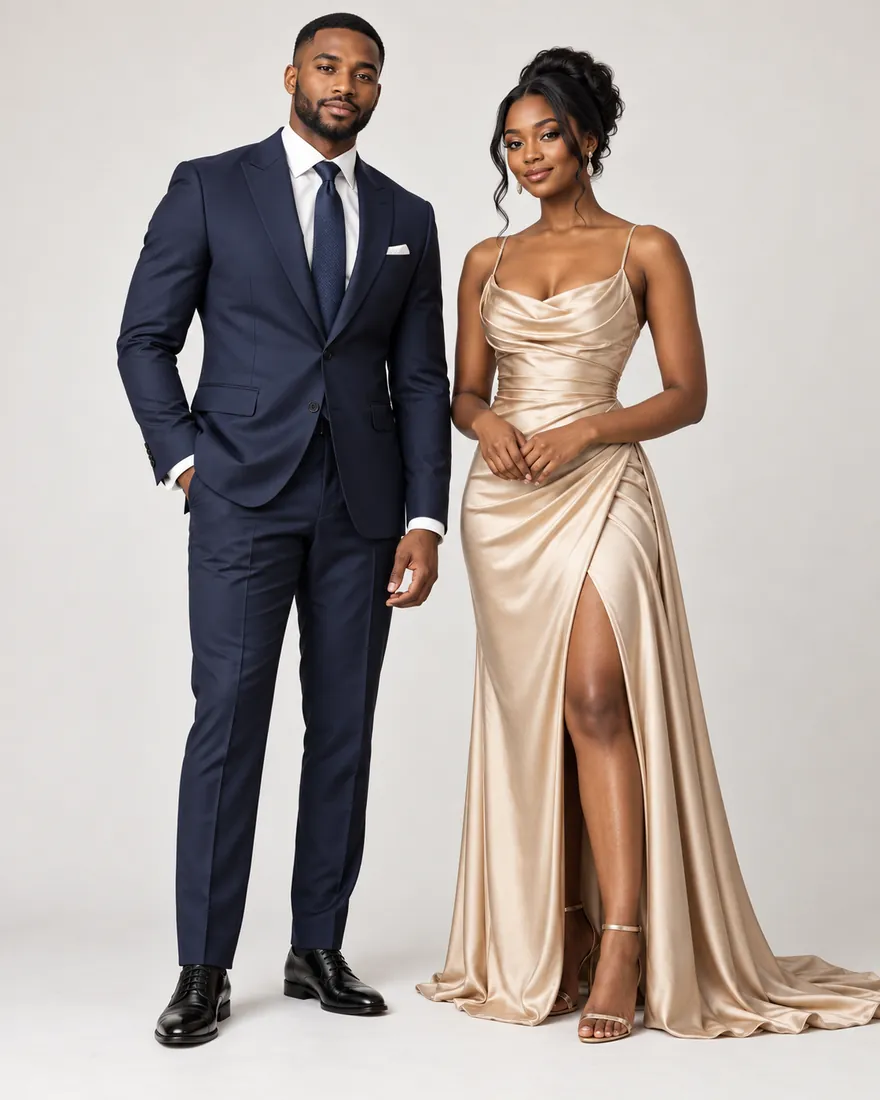
No. 3 · Polished and elegant
Formal
Many hosts write “formal” to mean much the same as black tie optional. Expect an elegant event, often in the evening, where everyone has made an effort.
- Suits and shirts
- A dark, well-fitted suit with a dress shirt and a tie. A tuxedo is welcome in the evening.
- Dresses and more
- A floor-length gown, an elegant cocktail dress, or a dressy jumpsuit, in rich fabrics such as satin, silk, or crepe.
- Leave at home
- Sundresses, khakis, and open collars.
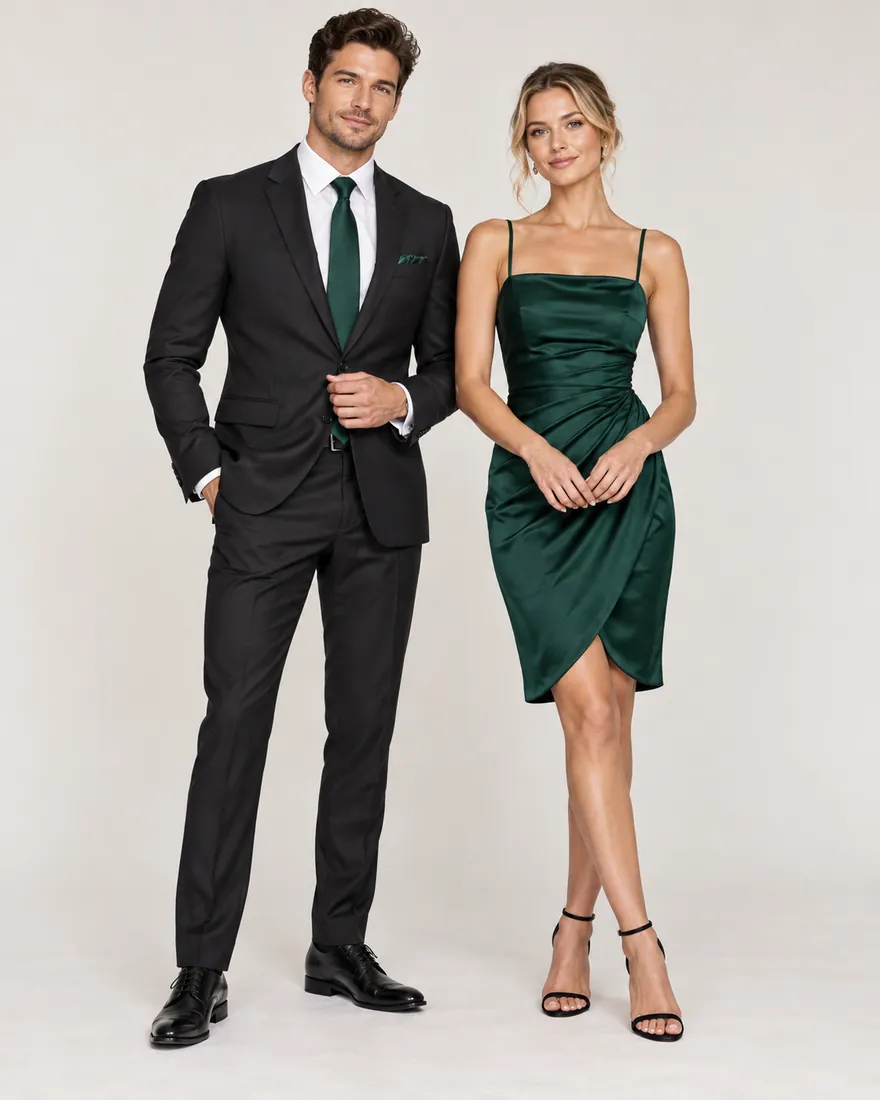
No. 4 · Dressed up, not floor-length
Cocktail
One of the most common dress codes of all, for cocktail parties, evening receptions, launches, and many weddings. It is dressy and celebratory, but a step less formal than a gown: think of a smart evening party.
- Suits and shirts
- A suit and a tie, in darker colors for the evening. Dress shoes.
- Dresses and more
- A cocktail dress from the knee to mid-calf, a dressy jumpsuit, or elegant separates, with heels or dressy flats.
- Leave at home
- Floor-length ball gowns (too much), and jeans or sneakers (too little).
No. 5 · Cocktail, with personality
Festive
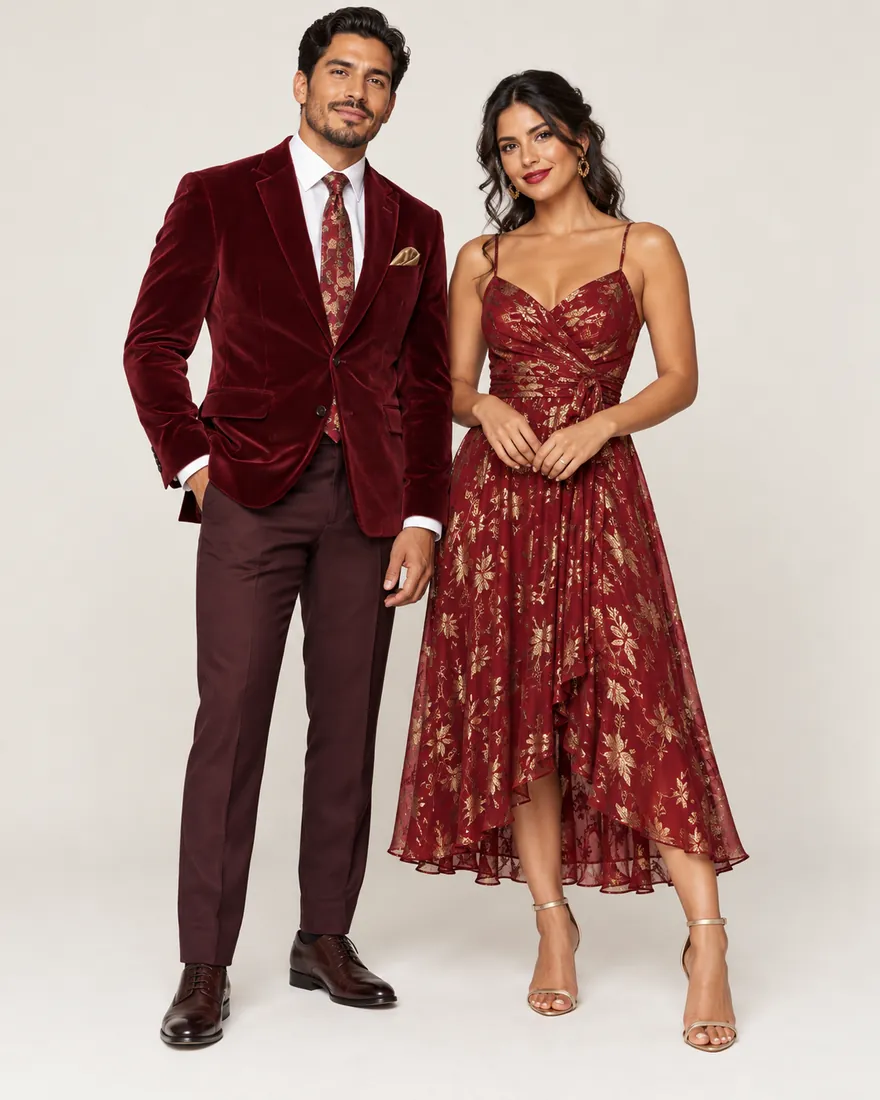
Festive is about as dressy as cocktail, with permission to have fun. It turns up most often around the holidays, at New Year’s Eve parties, and at celebrations where the hosts want the room full of color.
- Suits and shirts
- A suit or a velvet jacket in a rich color, a patterned or bright tie, a bold pocket square.
- Dresses and more
- Jewel tones, metallics, sequins, velvet, or a pattern you love, in a cocktail or midi length. Statement jewelry is welcome.
- Leave at home
- Anything you would wear to the office, and costumes. Festive means a little shine, not fancy dress.
No. 6 · Smart, with room to choose
Semi-formal
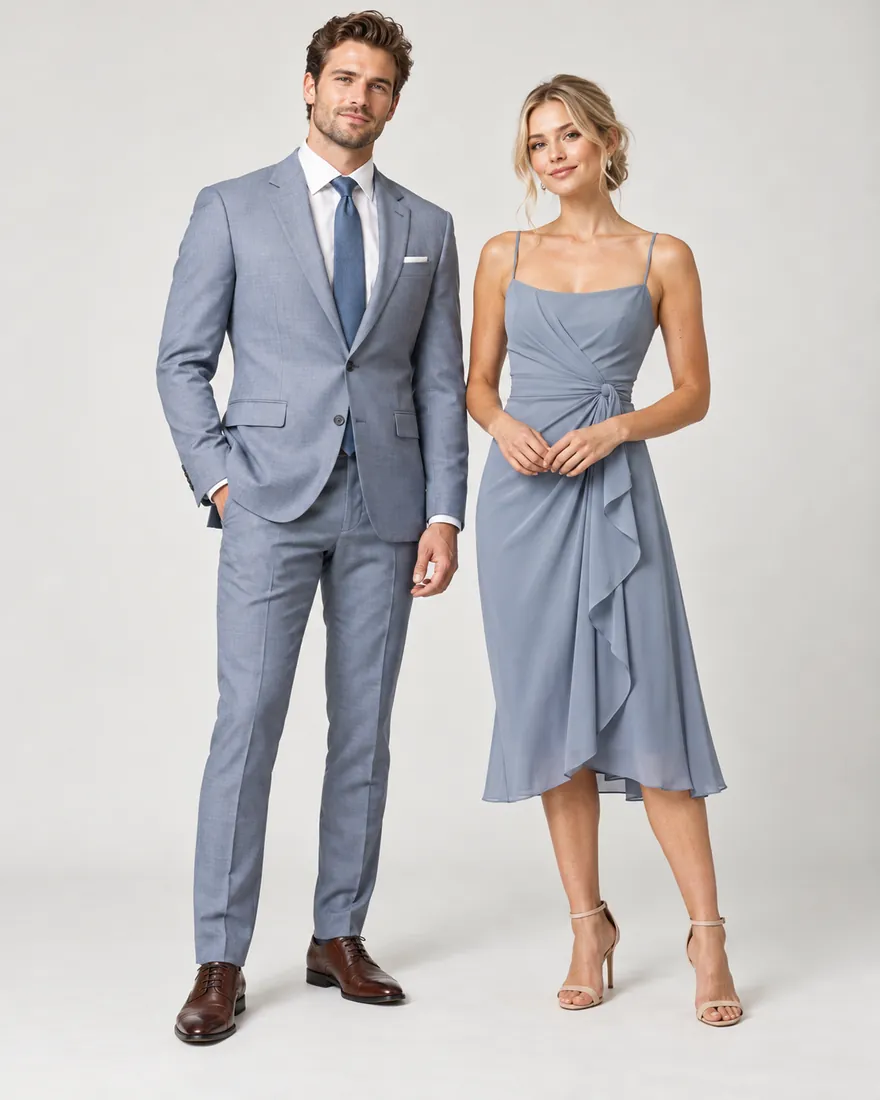
Close to cocktail, and often used for the same kinds of events: dinners, daytime celebrations, receptions, and weddings. The time of day matters most here: lighter colors and fabrics for an afternoon, darker and dressier for the evening.
- Suits and shirts
- A suit, in gray, blue, or tan by day and darker at night. A tie is a safe choice.
- Dresses and more
- A cocktail or midi dress, a dressy skirt and top, or a jumpsuit.
- Leave at home
- Floor-length gowns and tuxedos, and anything casual.
No. 7 · Also called smart casual
Dressy casual
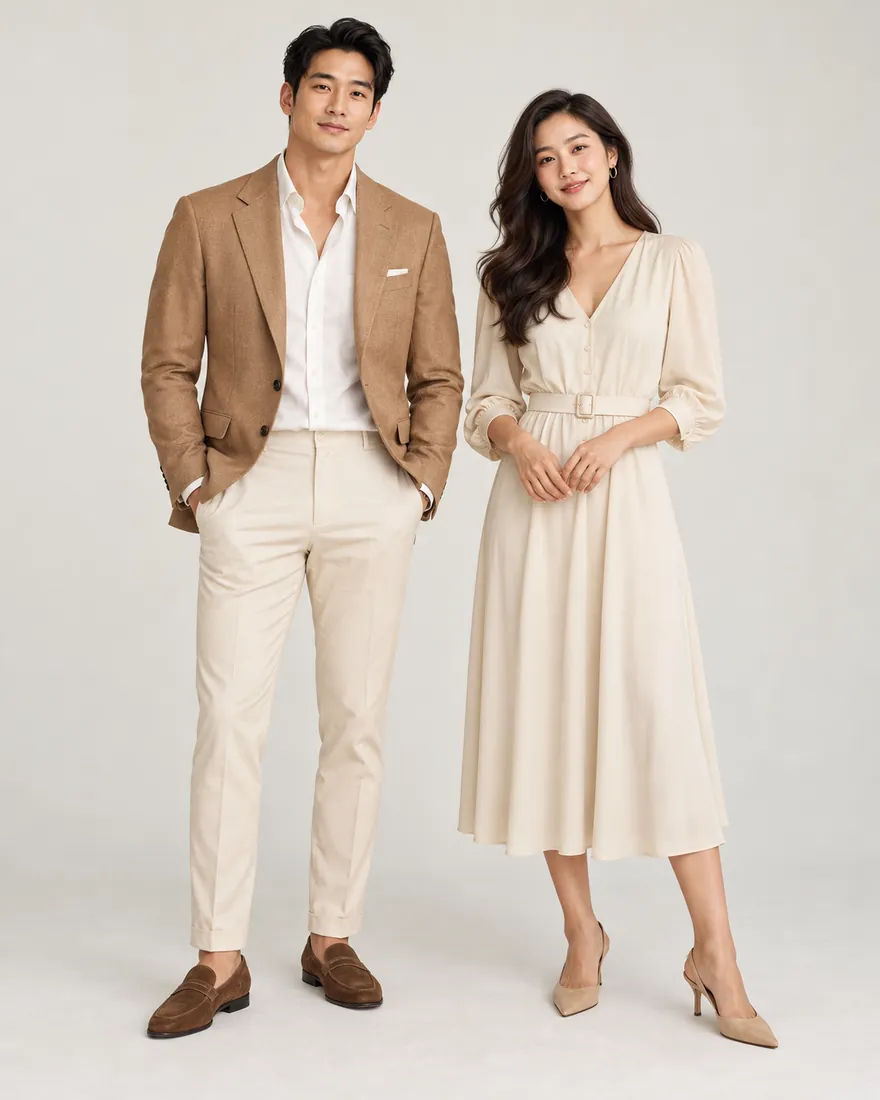
A step up from casual. Relaxed, but put together: the kind of outfit you’d wear to a nice dinner out, a dinner party, or a birthday celebration. “Smart casual” means the same thing.
- Suits and shirts
- A blazer or sport coat over a collared shirt, no tie needed, with chinos or tailored trousers and loafers.
- Dresses and more
- A sundress or midi dress, a nice skirt or trousers with a blouse, and dressy flats, sandals, or low heels.
- Leave at home
- T-shirts, shorts, flip-flops, and anything ripped.
No. 8 · Smart office
Business casual
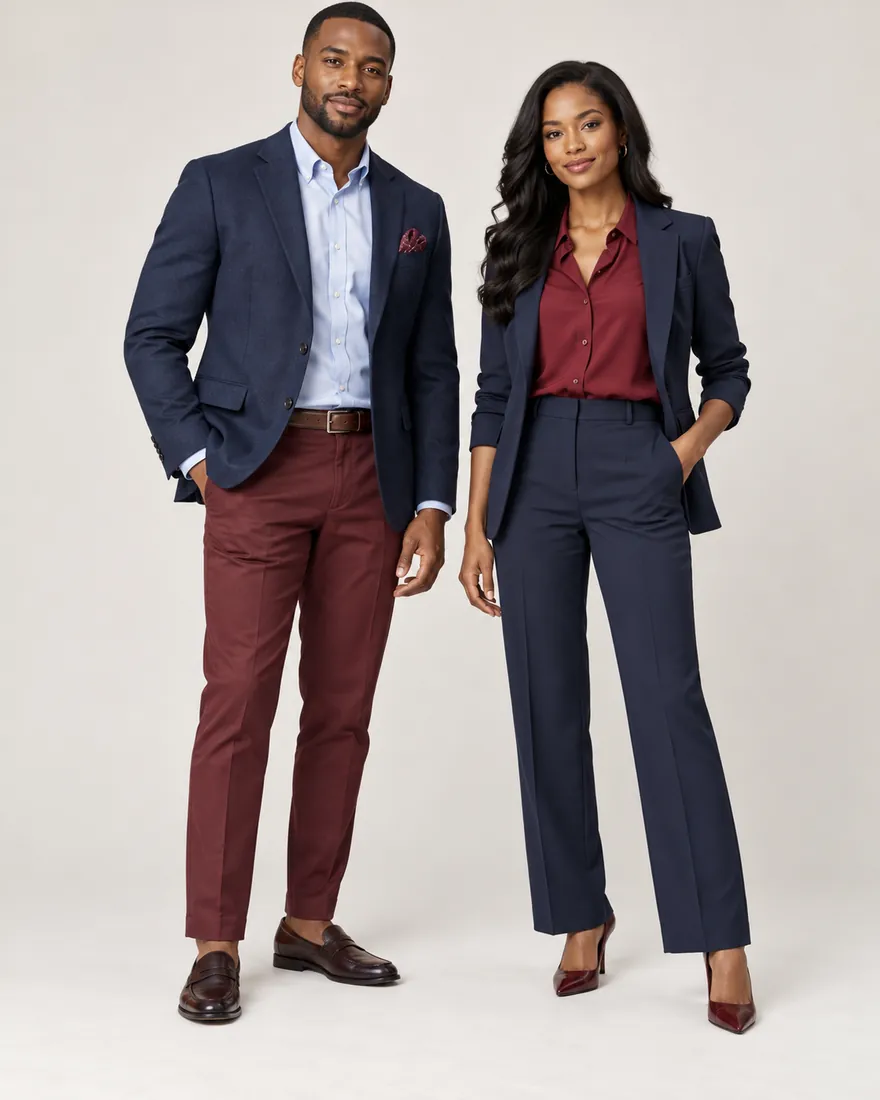
The everyday code of many offices, and common for conferences, work dinners, networking events, and daytime receptions. Dress as you would for a smart day at the office.
- Suits and shirts
- Tailored trousers or chinos with a button-down shirt, a blazer if you like, and leather shoes. No tie needed.
- Dresses and more
- A sheath or wrap dress, or trousers or a skirt with a blouse, with a blazer if you like.
- Leave at home
- Jeans, sneakers, and anything you would wear to the gym.
No. 9 · Relaxed
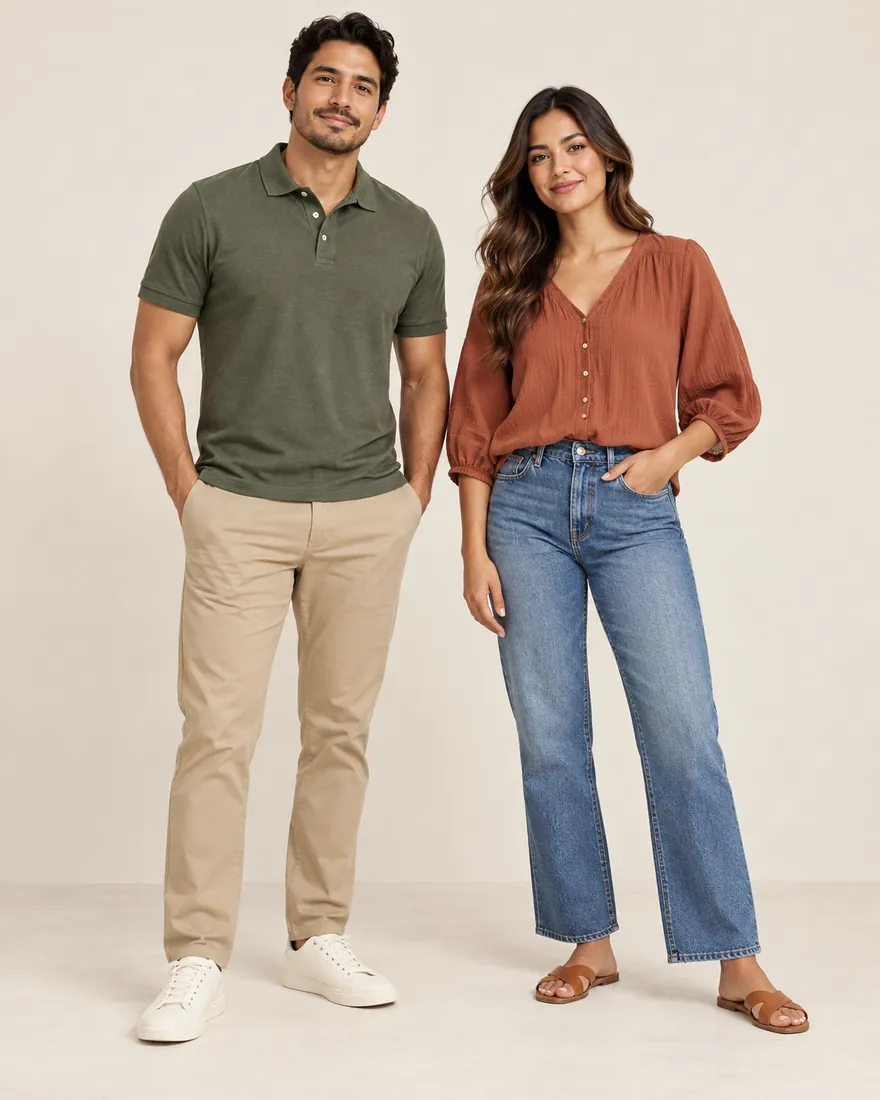
Casual
For backyard parties, barbecues, picnics, and relaxed daytime gatherings. Comfortable is the point, but you were invited, so dress neatly.
- Suits and shirts
- A polo or a button-down shirt with chinos or dark jeans, and clean sneakers or loafers.
- Dresses and more
- A sundress, or jeans or a skirt with a nice top, and sandals or flats.
- Leave at home
- Gym clothes, anything worn out or ripped, and beachwear (unless you are at the beach).
More dress codes you may see
Some invitations add a twist or the setting to a dress code. These are the ones you’ll meet most often.
Black tie, with a twist
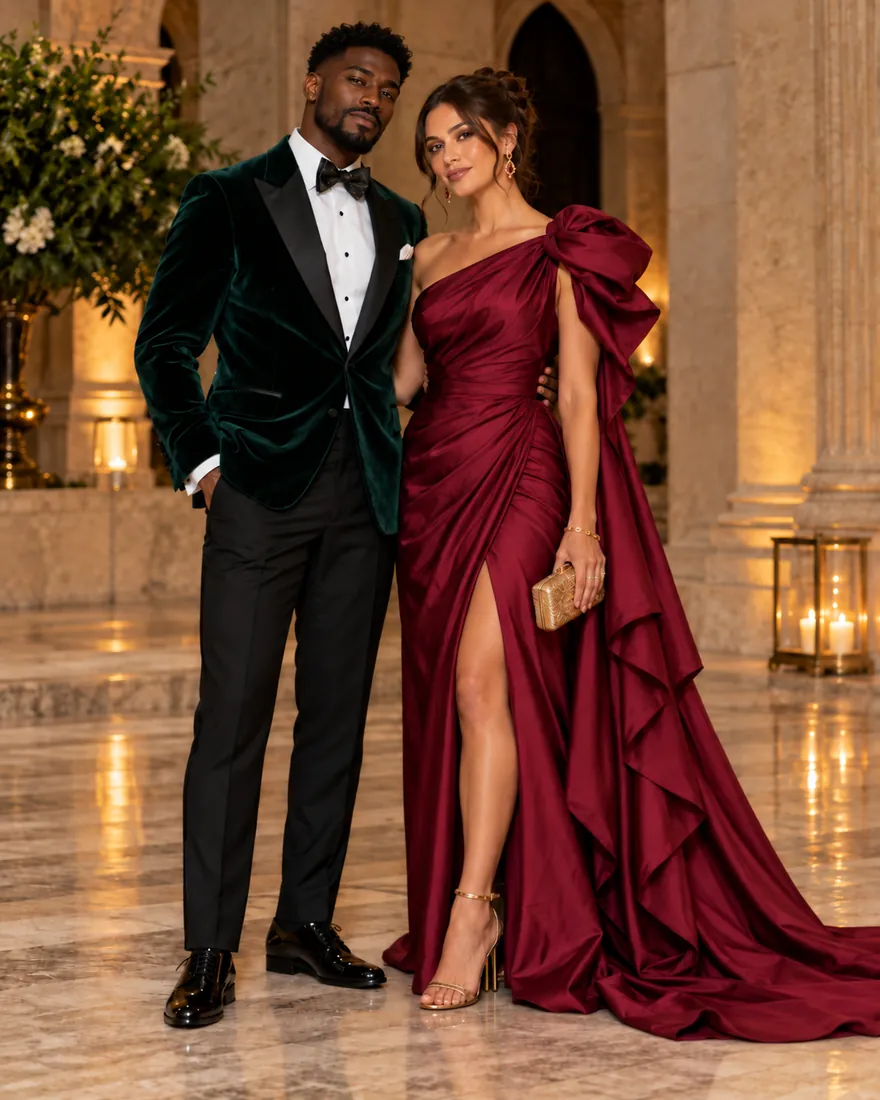
Creative black tie
As formal as black tie, with room for personality. Keep the length and the polish, and have fun with color, fabric, and detail.
- Suits and shirts
- A tuxedo with a twist: a jacket in velvet or a color, a patterned bow tie, statement shoes or cufflinks.
- Dresses and more
- A floor-length gown in a bold color or with an unexpected detail, such as a sculptural shoulder or a dramatic bow, or a dressy jumpsuit.
- Leave at home
- Anything less formal than black tie. The twist is in the details, not in dressing down.
Formal, for the sand
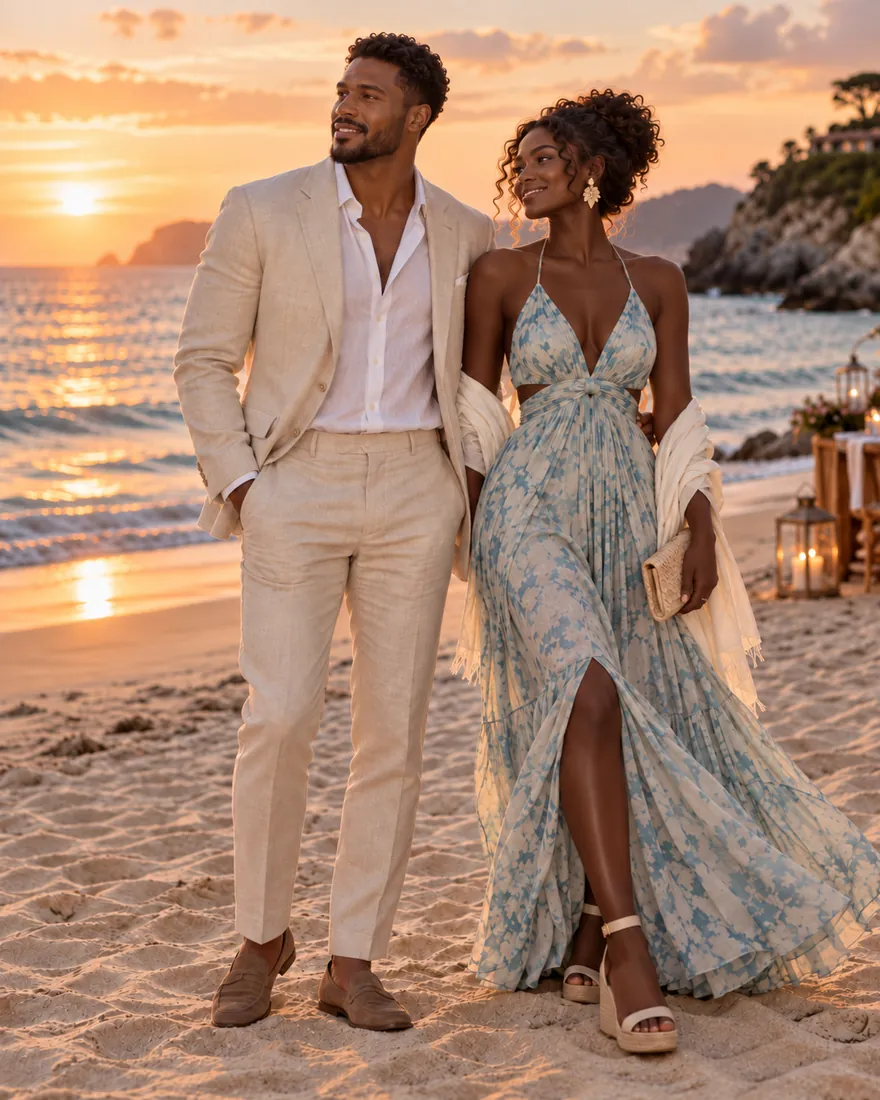
Beach formal
Dressed up for an event on the beach: elegant, but light enough for sun, wind, and sand underfoot.
- Suits and shirts
- A lightweight suit in linen or a pale color, often with no tie, and loafers or dressy sandals.
- Dresses and more
- A flowing maxi or midi dress in a light fabric, with flat or wedge sandals, because heels sink. Bring a wrap for when the sun goes down.
- Leave at home
- Stilettos, heavy dark wool, and swimwear.
Semi-formal, outdoors
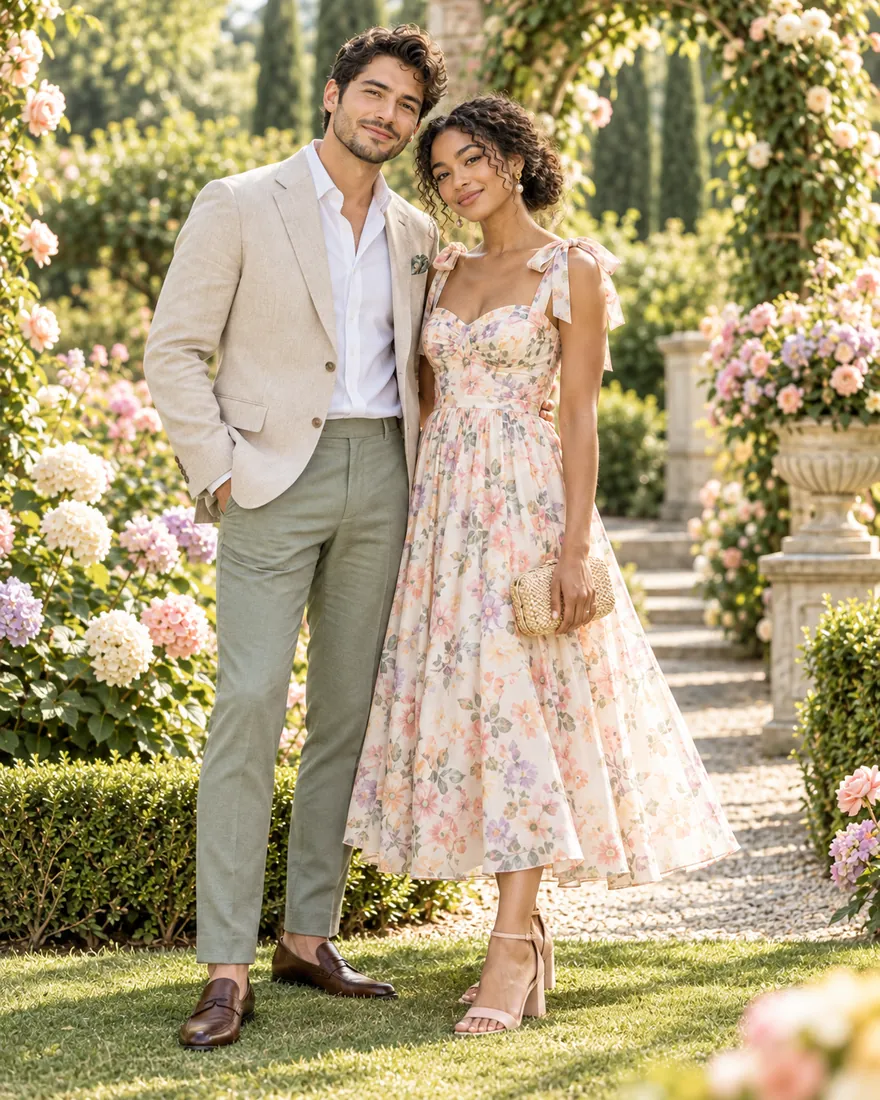
Garden attire
Semi-formal for an afternoon among the flowers: light, fresh, and ready for a lawn. “Garden party” and “garden formal” ask for much the same.
- Suits and shirts
- A light suit, or a sport coat with trousers, in soft colors and linen or cotton. A tie is optional.
- Dresses and more
- Florals, pastels, and light fabrics: a tea-length or midi dress, with block heels, wedges, or flats for the grass.
- Leave at home
- Stilettos, which sink into the lawn, and heavy, wintry fabrics.
Getting it right
- Read the time and the place. An evening event is dressier than one at noon, whatever the code. Grass, sand, and cobblestones all have opinions about your shoes.
- When in doubt, go one step dressier. It is easier to take off a tie or a jacket than to wish you had brought one.
- Traditional and cultural dress is almost always welcome. If it fits the formality of the code, it fits the event.
- Ask. If the invitation leaves you unsure, ask the host. They would rather you asked than wondered.
If it’s a wedding
Every code above means the same at a wedding, with a few things to add.
- Leave white to the couple. White, ivory, and cream are theirs for the day, whatever the dress code, unless they ask everyone to wear them. At other events, white tie included, white is yours to wear.
- Think of the ceremony, too. A dress code usually describes the reception. A ceremony in a place of worship may ask for covered shoulders, so bring a wrap or a jacket.
- Check what the couple has shared. Many couples add their dress code, an example outfit, and notes to their wedding website or app. If you are still unsure, ask them or someone in the wedding party.
Choosing a dress code for your event
Choose the code that matches what you are planning: the time, the place, and the feeling you want. Then make it easy to follow.
- Name one code. “Cocktail” is clearer than “cocktail or semi-formal.”
- Add a line of help. “Black tie optional. Dinner is on the lawn, so leave the stilettos at home.”
- Show an example. A picture of the kind of outfit you mean answers most questions before they are asked.
- Mention colors to avoid, if there are any, or a palette you’d love everyone to wear.
Planning a wedding? In Jovvy, put your dress code in Key info, with an example outfit if you like. When it’s one of the codes here, your guests see “What does this mean?” beside it, opening its part of this guide, in the app and on your wedding website.